Best VoIP providers in Chennai | Unified solution provider in Chennai

Virtual Phone Number for Business: How It Works and Why It Matters
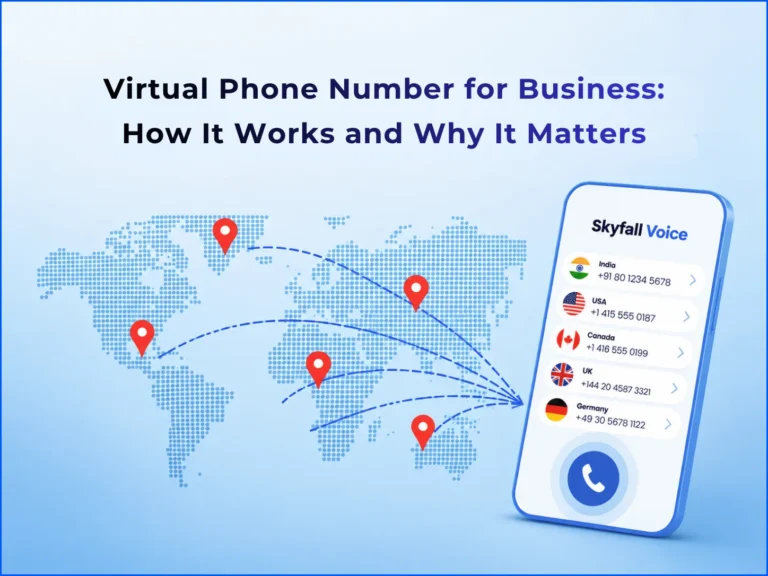
Business communication has moved far beyond the traditional office telephone. Companies now have remote employees, multiple locations, distributed sales teams, customer support departments, and customers across different regions. A Virtual Phone Number for Business provides a flexible way to manage these conversations without tying business communication to a single physical phone line or office.
Instead of depending on a desk phone, businesses can use a cloud-based communication platform to route calls to employees, departments, mobile devices, IP phones, or applications. This makes virtual numbers particularly useful for organizations looking for a more adaptable approach to business calling. Skyfall Voice provides business communication solutions that can help organizations build calling environments around their operational requirements.
How Does a Virtual Phone Number Work for Businesses?
A virtual phone number is a business telephone number that operates through an internet-based communication system rather than being directly connected to a traditional telephone line.
The number can be configured to send incoming calls to different destinations according to predefined rules. For example, a customer calling a company’s sales number could be directed to the sales team, while a support enquiry could be routed to customer service.
The important difference is that the number is not necessarily tied to one physical phone or location.
This gives businesses greater flexibility when employees work remotely, teams operate from multiple offices, or the company expands into new markets.
How Does a Virtual Phone Number Work?
The process is handled through a cloud communication platform.
A typical call flow looks like this:
Customer → Business Number → Cloud Platform → Call Routing → Employee or Department
When someone calls the number, the platform identifies the configured routing rules and sends the call to the appropriate destination.
For example, a business might create an IVR menu:
Press 1 for Sales
Press 2 for Customer Support
Press 3 for Accounts
Press 4 for General Enquiries
The caller’s selection determines where the call goes next.
Businesses can also configure routing based on working hours, employee availability, departments, or other operational requirements.
Why Are Businesses Using Virtual Numbers?
The way companies operate has changed significantly. Employees may work from home, travel between locations, or collaborate with teams in different cities.
A traditional telephone setup can make these changes more complicated because communication is often connected to physical infrastructure.
Cloud-based calling allows businesses to separate the phone number from a particular desk or office.
For example, an employee can potentially handle business calls from a supported mobile device or computer while maintaining the same professional business number.
This flexibility is one of the main reasons companies consider virtual communication solutions.
Key Benefits for Businesses
1. Create a Professional Communication Channel
A professional business number creates a reliable contact point that customers can use whenever they need to reach your team.
Employees don’t need to rely on personal numbers for business conversations, and the company can maintain its communication identity even when team members change roles or locations.
2. Support Remote and Distributed Teams
Remote employees can be part of the same communication system as office-based employees.
Instead of requiring every employee to work from a physical office, businesses can configure calls to reach supported devices and applications used by their teams.
This can be particularly useful for companies with hybrid or distributed workforces.
3. Organize Incoming Calls
Not every customer needs the same department.
Call routing allows businesses to direct different types of enquiries to the appropriate teams. This can reduce unnecessary transfers and help employees focus on the calls relevant to their responsibilities.
For example:
Sales enquiry → Sales team
Technical issue → Support team
Billing question → Accounts team
This creates a more structured customer communication process.
4. Manage Multiple Locations
Businesses operating from several cities or offices can use centralized communication management instead of maintaining completely separate systems for every location.
Teams can be organized by department, region, or function while administrators manage the communication environment from a centralized platform.
5. Adapt as the Business Grows
Communication requirements often change as companies expand.
A growing business may need additional users, departments, numbers, or calling capabilities. A cloud-based approach can make these changes easier to manage compared with rebuilding a physical telephone setup.
Where Can Virtual Business Numbers Be Used?
Virtual numbers aren’t limited to one particular type of company. Different industries can use them according to their communication requirements.
RCM and Medical Billing
Revenue cycle management and medical billing organizations often communicate with healthcare providers, insurance companies, patients, and internal teams.
A structured calling environment can help separate departments and manage different types of enquiries.
Healthcare BPO
Healthcare BPO operations may have multiple teams handling significant call volumes. Call routing and centralized management can help direct callers to the appropriate team.
Staffing and Recruitment
Recruitment businesses regularly communicate with candidates and clients. A dedicated business number can provide recruiters with a professional communication channel while keeping personal contact details separate.
High-Volume BPO
BPO organizations can have large teams handling inbound and outbound communication.
A cloud communication platform can help administrators organize users, departments, numbers, routing rules, and call activity within a centralized environment.
Sales and Customer Support
Sales representatives can use dedicated numbers for customer conversations, while support teams can have separate call flows designed around service enquiries.
Features That Can Make a Difference
A virtual number itself is only one part of a modern business communication system. Depending on the provider and plan, businesses may have access to additional capabilities.
Interactive Voice Response
IVR allows callers to interact with a menu and select the department they need.
A well-designed IVR can make it easier for callers to reach the right team without requiring manual transfers.
Call Routing
Routing rules can determine where calls should go based on factors such as department, availability, working hours, or predefined business rules.
Call Recording
Call recording can support quality monitoring, employee training, and internal review. However, businesses should consider applicable privacy and legal requirements before enabling or using call recordings.
Call Analytics
Call reports can provide information about communication activity, including call volume, duration, answered calls, and missed calls.
These insights can help managers understand how teams are handling customer communication.
CRM Integration
Connecting the calling system with a CRM can help teams access relevant customer information while handling calls.
For sales and support teams, this can reduce repetitive work and create a more connected workflow.
Multi-Device Access
Depending on the platform, employees may be able to manage business calls through computers, smartphones, IP phones, or other supported applications.
This is useful for teams that don’t work exclusively from traditional office desks.
Virtual Number vs Traditional Phone System
Both traditional and virtual communication systems can serve business requirements, but their infrastructure is different.
A traditional telephone setup generally depends more heavily on physical equipment, fixed connections, and office-based infrastructure.
A virtual communication system uses internet connectivity and cloud-based technology to manage calling.
This can provide greater flexibility for organizations with remote teams, multiple offices, or changing communication requirements.
However, businesses should consider their network reliability, call volume, existing infrastructure, security requirements, and operational needs before deciding which approach is appropriate.
How to Choose the Right Solution
Choosing a virtual communication provider should begin with your actual business requirements rather than the number of features listed on a product page.
Understand Your Calling Requirements
Determine whether your business mainly handles inbound calls, outbound calls, international communication, customer support, sales calls, or high-volume operations.
Evaluate Call Volume
A small business with a few employees may have very different requirements from a BPO with hundreds of agents.
Understanding your expected call volume can help you choose an appropriate solution.
Think About Scalability
Your communication requirements today may not be the same a year from now.
Consider whether the system can support additional employees, departments, locations, and numbers as the organization develops.
Review Reliability and Security
Business calls may contain confidential information. Before choosing a provider, review its approach to infrastructure reliability, security, data protection, and applicable compliance requirements.
Common Mistakes to Avoid
Choosing a virtual communication solution purely because it offers many features can create unnecessary complexity.
Businesses should avoid:
Choosing without understanding call requirements:
The communication needs of a sales team can be very different from those of a high-volume contact center.
Ignoring call quality:
A cloud-based calling system still depends on network and internet performance. Reliable connectivity is important.
Overlooking integrations:
If employees already depend on CRM or business applications, integration capabilities can affect everyday productivity.
Failing to plan for growth:
A solution that works for a small team may become difficult to manage as the organization expands.
Ignoring security and compliance:
Businesses should understand how communication data is handled and what requirements apply to their industry.
The Future of Business Calling
Business communication continues to evolve as companies adopt cloud platforms, remote work models, automation, CRM integrations, and AI-powered technologies.
A virtual number can serve as one component of this broader communication environment.
Instead of thinking about a business number as simply a way to receive calls, companies can consider how it connects customers with people, departments, applications, and workflows.
This shift can help organizations build communication systems that are more adaptable to changing business requirements.
Conclusion
A Virtual Phone Number for Business provides a flexible approach to managing professional calls without restricting communication to a traditional physical telephone setup. Businesses can use virtual numbers alongside features such as IVR, call routing, analytics, recording, and CRM integration to create a communication environment suited to their teams.
The right solution depends on your call volume, workforce structure, locations, required features, connectivity, security requirements, and growth plans.
With Skyfall Voice, businesses can explore modern communication solutions designed for different operational and calling requirements, from sales and customer support to RCM, healthcare BPO, recruitment, and high-volume BPO operations.
The goal isn’t simply to replace a traditional phone number. It’s to build a communication system that can adapt as your business and customers evolve.